From the Jobsite to the Pentagon: Construction Data Is Now a Policy Issue
I did not begin my career in a government office, a technology company or a boardroom.
I was a subcontractor’s wife.
After watching the construction industry’s broken information practices contribute to the destruction of our family’s 45-year subcontracting business, my husband Dominick and I made a life-changing decision. We shut down the company, invested $15,000 and began building MySmartPlans in a 700-square-foot garage.
We believed every participant should be able to defend their contract—and every owner should have access to the complete, verified record of the project.
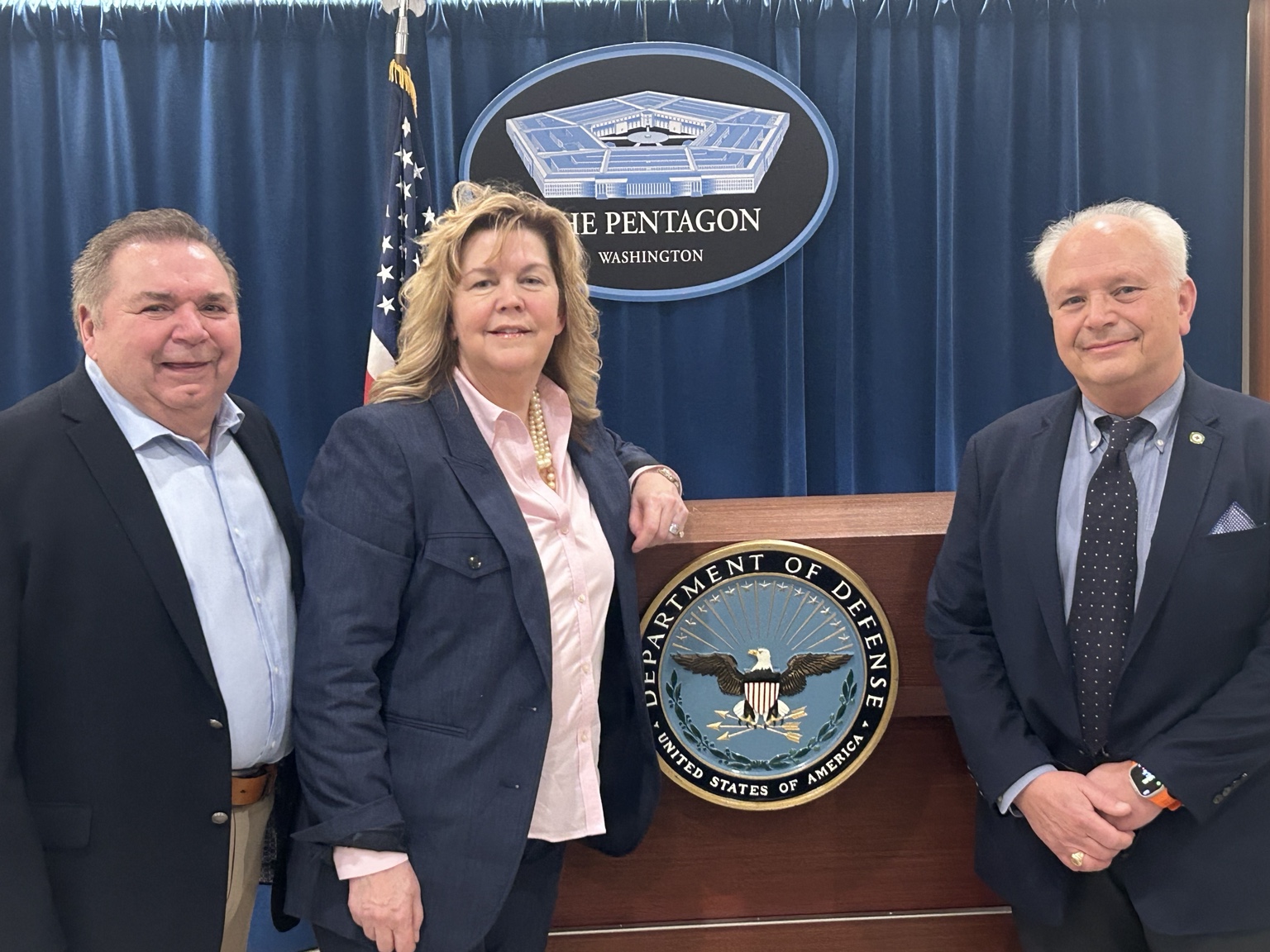
That conviction eventually took me from the jobsite to the Pentagon.
A Seat in the Room
I was personally invited to the Pentagon to participate in discussions concerning the digital management of military construction. I met with former Under Secretary of the Army Michael McAndrew and contributed practical insight drawn from years of supporting complex public construction projects.
I was not there to discuss another piece of software.
I was there to discuss a much larger problem: how can public owners make responsible decisions when the knowledge behind their projects is fragmented, contractor-controlled or impossible to verify?
The answer is not another disconnected application. It is independent information governance.
The Problem Reached Congress
The FY2024 House Armed Services Committee Report accompanying the National Defense Authorization Act included a section titled “Digital Platforms to Manage the Military Construction Process.”
That congressional recognition matters.
It demonstrates that the way military-construction information is captured, managed and preserved is not merely an administrative concern. It affects accountability, project delivery, taxpayer dollars, operational readiness and the long-term stewardship of public assets.
The need identified at the federal-policy level is the same need owners encounter on projects every day:
- Information is distributed across emails, platforms and personal files.
- Contractors may control the systems containing the project record.
- Decisions are made using incomplete or outdated information.
- Changes become disputes because the supporting facts cannot be assembled quickly.
- Critical knowledge disappears when project personnel leave.
- Facility teams inherit files instead of usable operational intelligence.
The industry has more data than ever, yet owners are still being asked to make billion-dollar decisions with educated guesses.
The Owner Must Control the Facts
MySmartPlans created a new category in construction: independent, owner-side project information governance.
We are hired by the owner as a third party to capture, organize, verify and preserve the complete project record. Our managed service and proprietary AI connect contracts, schedules, drawings, RFIs, submittals, field reports, meeting minutes, changes, commissioning records and turnover documentation.
Every authorized submission is date- and time-stamped. Every answer can be traced to supporting project evidence. Every stakeholder works from one governed source of truth, with roles and permissions established by the owner.
The general contractor should not be the only party controlling the record—or auditing its own work. The owner paid for the project, carries the risk and will operate the facility for decades. The owner should control the knowledge.
Build with the Complete Data from Day One
Owners are often told that better records can be assembled during closeout or after a dispute begins. By then, it is too late.
People have left. Memories have changed. Documents are missing. Decisions must be reconstructed from disconnected systems. Lawyers and consultants are paid to determine what should have been visible throughout construction.
MySmartPlans approaches every project as e-discovery from Day One.
We build the complete, litigation-ready record while the work is happening—not after the relationship has deteriorated. This does not promise that disputes will never occur. It ensures that when a question arises, the owner has organized, verifiable evidence available to address it.
That changes behavior. When everyone knows the record is complete, current and independently governed, the change-order games become much harder to play.
From Construction to 50 Years of Operations
The value does not end when construction is complete.
The knowledge created during the project becomes a permanent, personalized hub for the facility. Owners can retrieve commissioning documentation, equipment records, warranties, approved drawings, operations manuals, supplier information and service history without calling former contractors or searching through archived boxes.
The project becomes operational intelligence for the next 50 years.
This Is Bigger Than Technology
MySmartPlans began because one family experienced what happens when construction facts are fragmented, controlled and weaponized.
We decided to build the system we believed the industry needed.
Today, the issue has reached the Pentagon and Congress because the consequences extend far beyond any one company or project. Reliable construction knowledge protects public money, strengthens accountability and helps ensure that mission-critical facilities are delivered ready to perform.
Construction does not need more guesswork. It needs verified intelligence.
Stop the change-order games. Build with complete project knowledge from Day One.
One source. Only facts. Asked and answered.
Ready to Build with the Facts?
Discover how MySmartPlans gives owners an independent, litigation-ready and operations-ready source of project truth.
Talk to Shelley | Visit MySmartPlans
Reference: FY2024 House Armed Services Committee Report 118-125, p. 396, “Digital Platforms to Manage the Military Construction Process.”

No responses yet