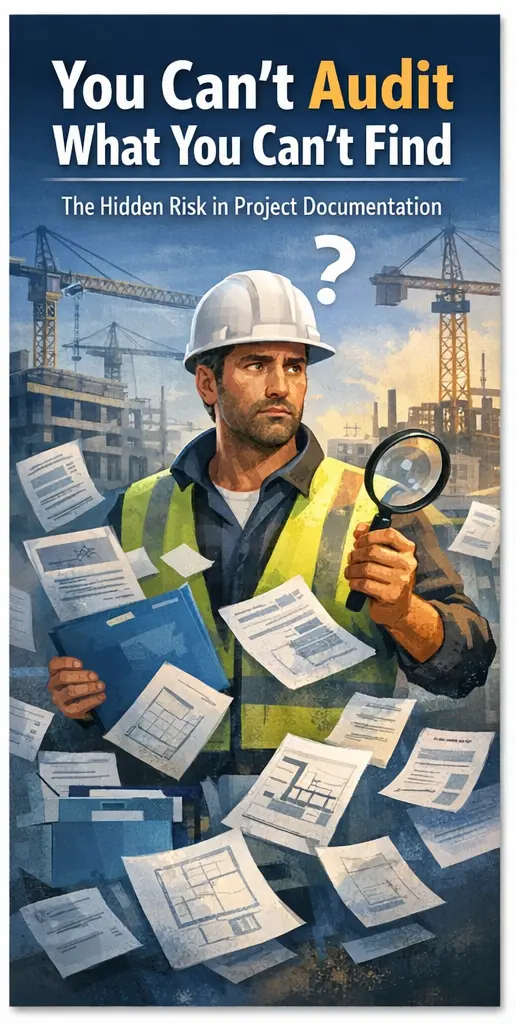
It sounds simple—almost obvious: you can’t audit what you can’t find.
But in construction, infrastructure, and facility management, this principle is at the center of one of the industry’s most expensive and overlooked risks.
The Reality: Information Everywhere, Clarity Nowhere
Modern projects generate an enormous volume of documentation—drawings, RFIs, submittals, inspections, and more. On paper, that should be a strength. More data should mean better decisions, stronger compliance, and reduced risk.
In reality, the opposite often happens.
That information is rarely centralized. Instead, it’s scattered across:
- Email threads
- Shared drives
- Personal folders
- Legacy systems
This fragmentation creates a dangerous gap between having information and being able to use it.
When It Matters Most, It’s Missing
The real problem doesn’t show up during day-to-day operations. It shows up when the stakes are high:
- Compliance audits
- Regulatory reviews
- Claims and disputes
- Project closeouts
That’s when teams start asking critical questions:
- Where’s the latest version?
- Who approved this?
- Is this even the final document?
And too often, the answers aren’t clear—or worse, they can’t be found at all.
The Cost of Disorganization
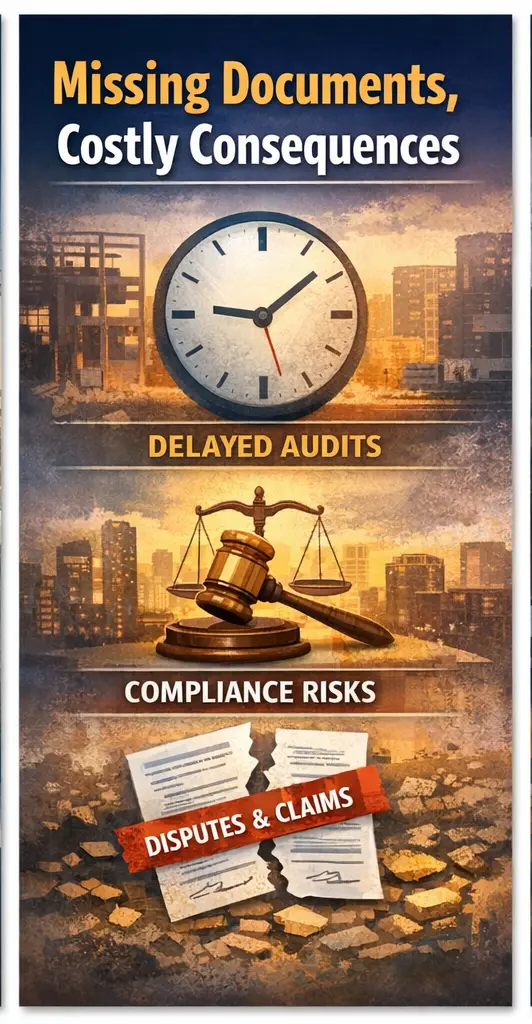
When documentation is disorganized or inaccessible, the consequences are real:
- Delays during audits that stall approvals and timelines
- Uncertainty in compliance that exposes organizations to penalties
- Increased risk in disputes where missing records weaken your position
If you can’t instantly access the right documentation, it might as well not exist when it matters most.
This isn’t just an operational inconvenience—it’s a business risk.
The Shift: From Storage to Structure
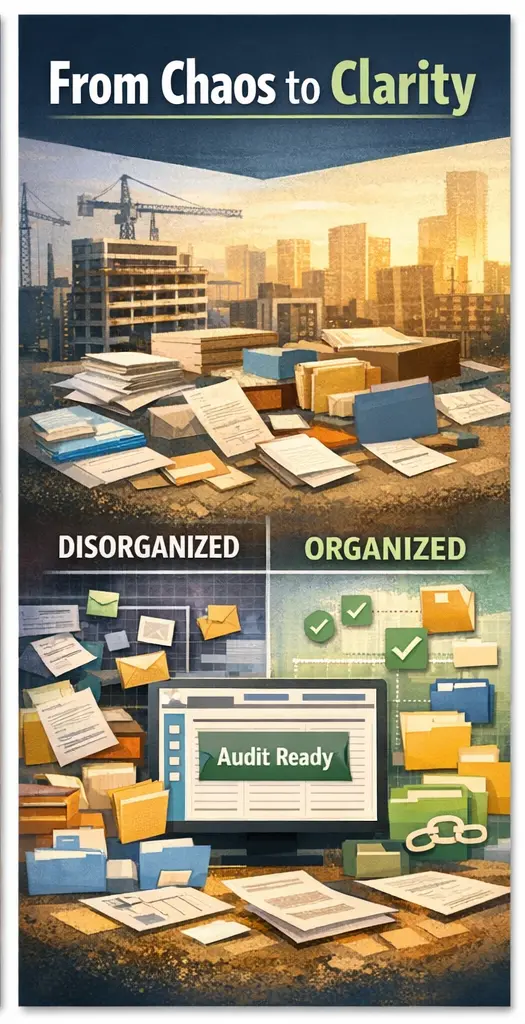
Many organizations believe they’ve solved this problem because they’ve digitized their documents. But storage alone isn’t the solution.
What’s missing is structure.
At MySmartPlans, the focus isn’t just on storing files—it’s on transforming documentation into a system that works for you. That means:
- Organizing information in a consistent, intuitive way
- Structuring data so it’s easy to navigate and understand
- Connecting related documents so context is never lost
The result is a system where everything is:
- Findable
- Verifiable
- Audit-ready
Building a Foundation of Accountability
When your documentation is structured and accessible:
- Every file has a defined place
- Every version is tracked
- Every decision has a clear record
That level of visibility changes everything. It reduces risk, strengthens compliance, and builds confidence across teams and stakeholders.
Because visibility isn’t a luxury—it’s the foundation of accountability.
The Bottom Line
If you can find it, you can trust it.
And if you can trust it, you can audit it.
Organizations that prioritize structured, connected documentation aren’t just improving efficiency—they’re protecting themselves from the risks that come with uncertainty.
In an industry where the details matter, the ability to instantly access the right information isn’t optional.
It’s essential.
No responses yet