Predictability has built over the last decade
For years, the goal of every major organization was to eliminate the unknown. We relied on APIs to standardize our workflows, scale our operations, and ensure that every digital handshake was identical and reliable. We built controlled systems where Input A always resulted in Output B.
But the horizon has shifted. We are moving away from a world of rigid, controlled systems and into an era of intelligent ones.
The Core Shift: Predictability vs. Adaptability
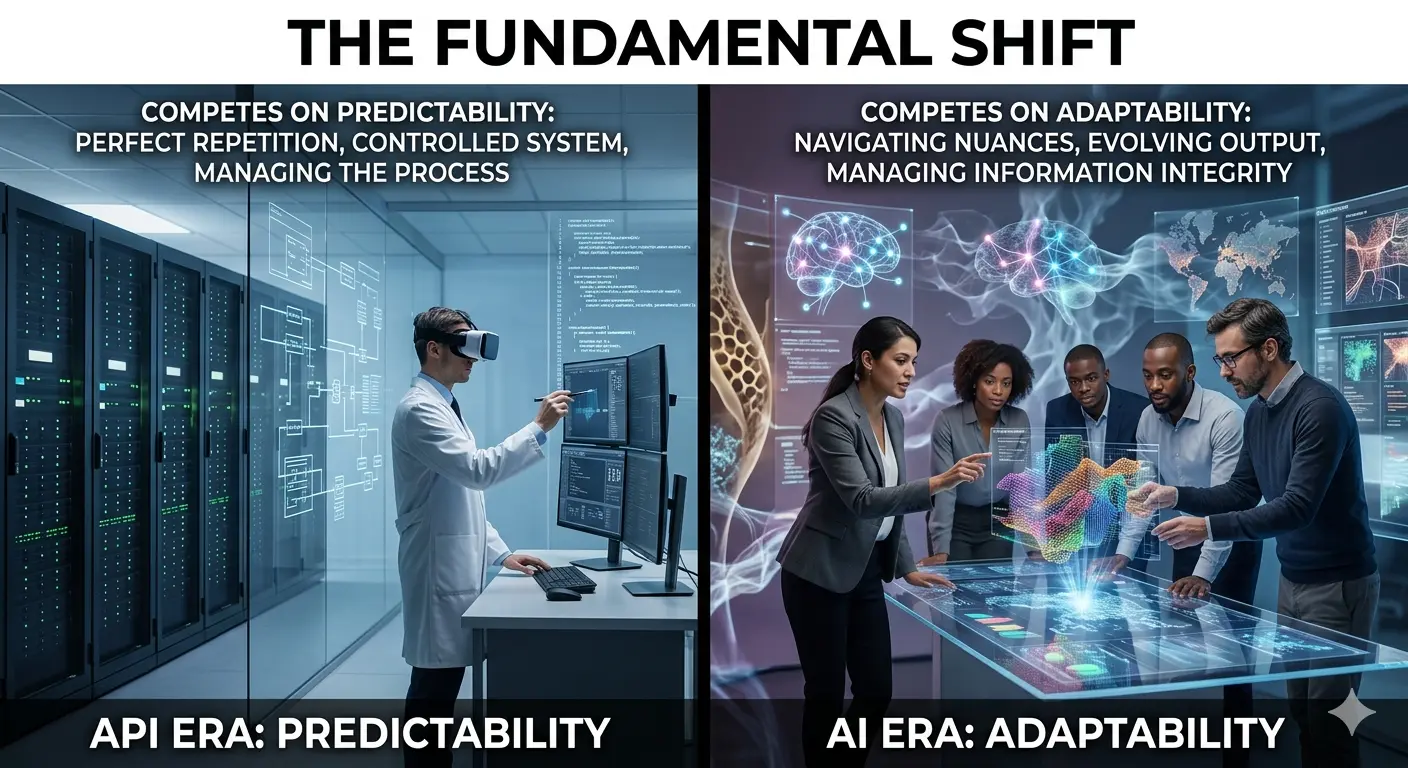
The fundamental difference between the API era and the AI era is the metric of success.
- APIs compete on predictability. They are designed to follow a set of instructions perfectly, every single time.
- AI competes on adaptability. It is designed to navigate nuances, synthesize vast amounts of disparate data, and evolve its output based on the specific context of a situation.
This isn’t just a technological upgrade; it is a fundamental shift in how we build, lead, and decide. In a controlled system, leadership is about managing the process. In an intelligent system, leadership is about managing the integrity of the information that fuels the system.
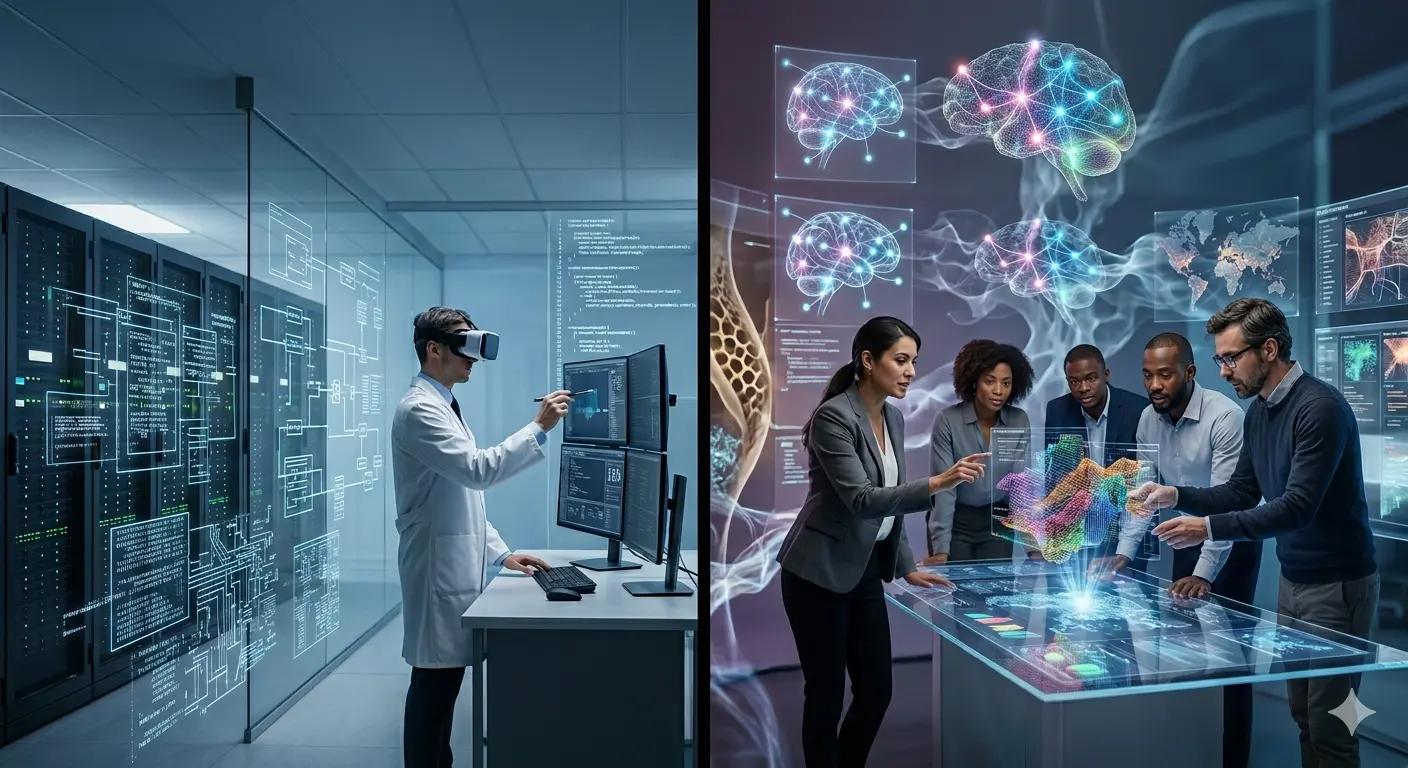
Why Data Integrity is Your Only “Source of Truth”
When systems become intelligent, they become highly sensitive to the quality of the data they ingest. In the construction and infrastructure sectors, a “controlled system” might have been a static set of PDFs or a standard project management log.
An “intelligent system,” however, takes that data and uses it to predict risk, identify schedule conflicts, and provide actionable insights. If the foundation of that data is fractured—if there are “data dumps” or disconnected silos—the intelligence fails.
Intelligent systems require information surety. You cannot have an adaptive, AI-driven organization if your data hasn’t been curated, indexed, and protected as a single source of truth.
The Readiness Gap
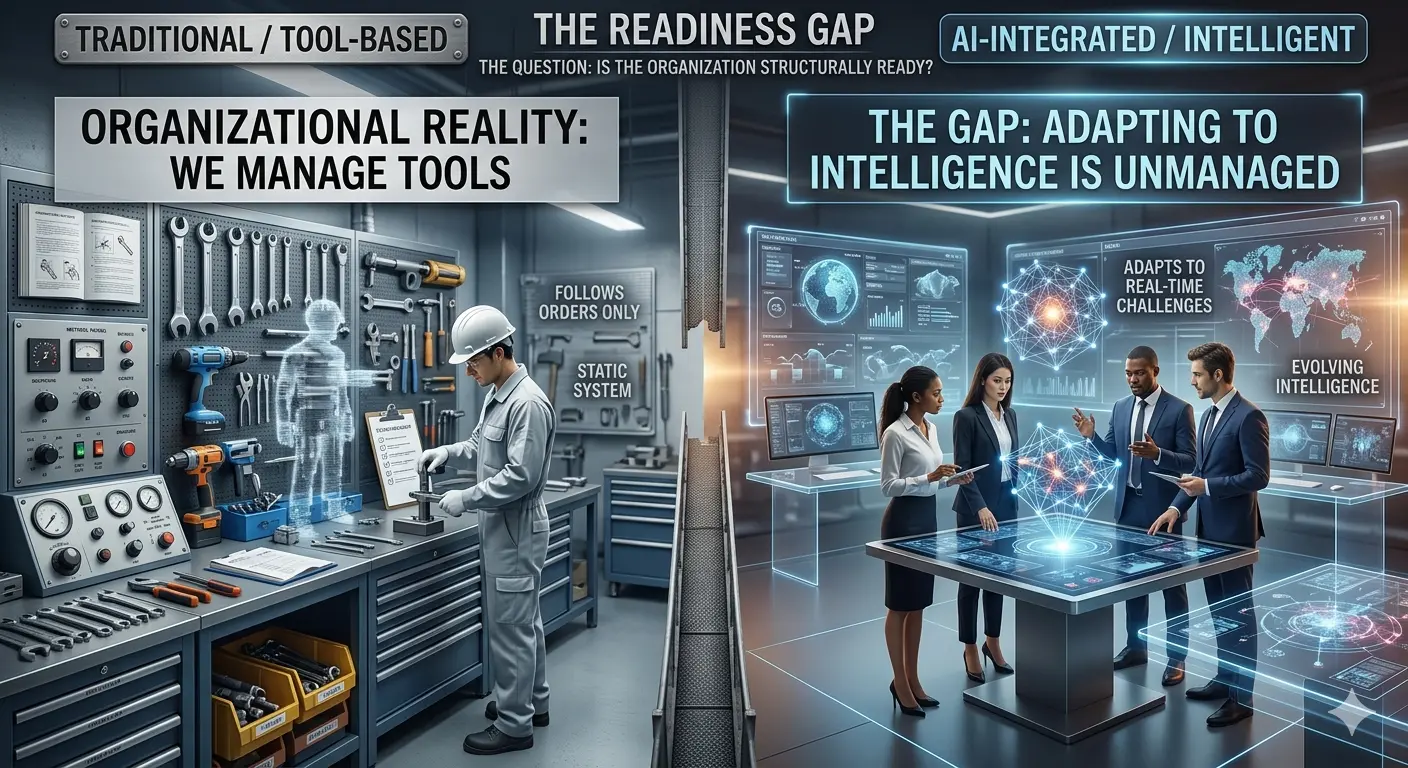
As we look toward the next decade of infrastructure and technology, the question isn’t whether AI will be integrated into the job site or the boardroom. The question is whether our organizations are structurally ready for a system that doesn’t just “follow orders,” but instead adapts to real-time challenges.
The shift from controlled to intelligent changes the stakes of decision-making. We are moving from a world where we manage tools to a world where we manage intelligence.
And most organizations aren’t ready for that shift.

No responses yet