
The Magic 8 Ball Is Not a Construction Strategy
🎱
“Outlook hazy.”
“Reply unclear.”
“Try again later.”
If you’ve ever held a Magic 8 Ball, you know the drill. You ask a question. You shake it. You hope the answer floating up in that little blue window gives you something useful.
Now let’s be honest.
How different is that from the way many construction projects run?
Asking Critical Questions… and Guessing the Answers
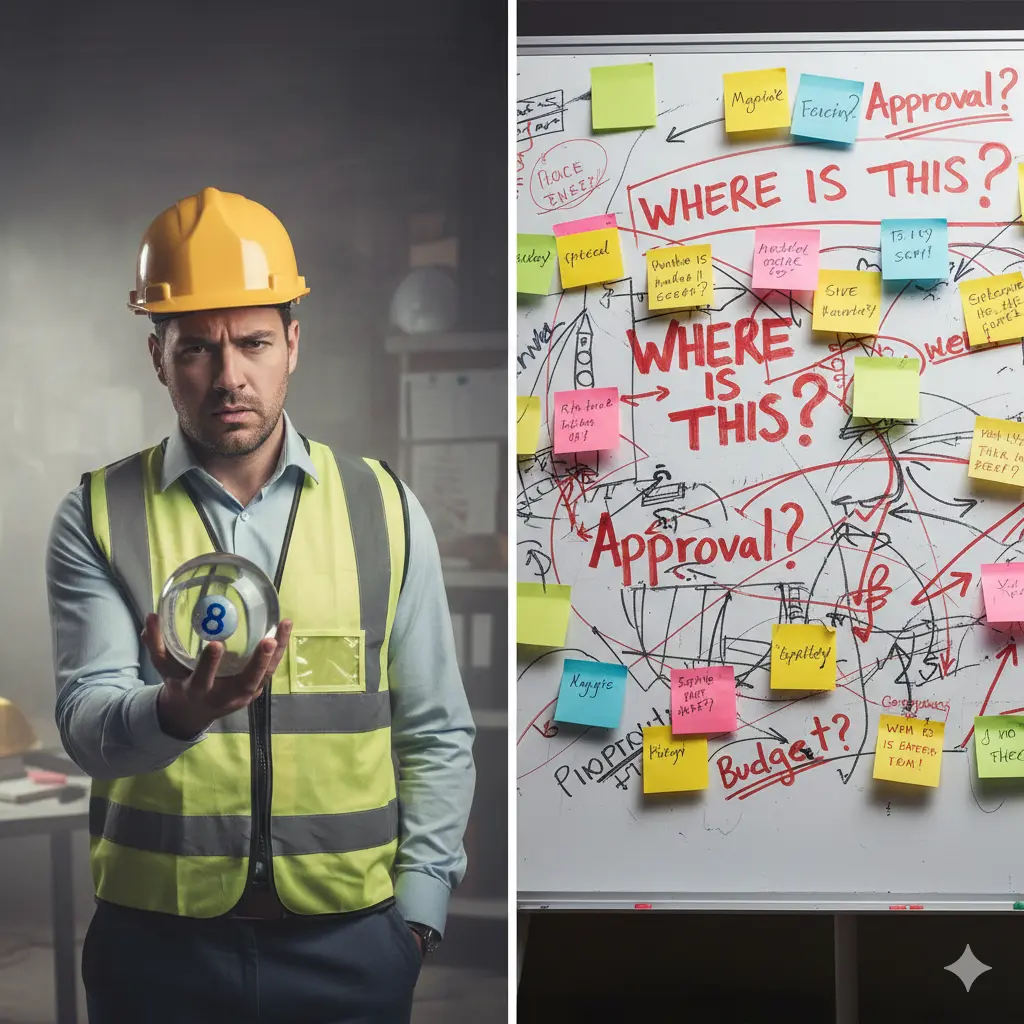
On any given project, these questions get asked daily:
- What’s the real status?
- Are we on budget — truly?
- Is that the latest drawing?
- Who approved that change?
- What version are we building from?
- Where is the final asset data?
And too often, the response isn’t a fact.
It’s a guess.
Someone “thinks” it’s updated.
Someone “believes” it was approved.
Someone “remembers” sending it.
Someone “assumes” it’s correct.
So we move forward.
We estimate.
We interpret.
We fill in gaps.
And we hope it works out.
That’s not project management.
That’s shaking a Magic 8 Ball.
The Real Issue Isn’t People — It’s Information
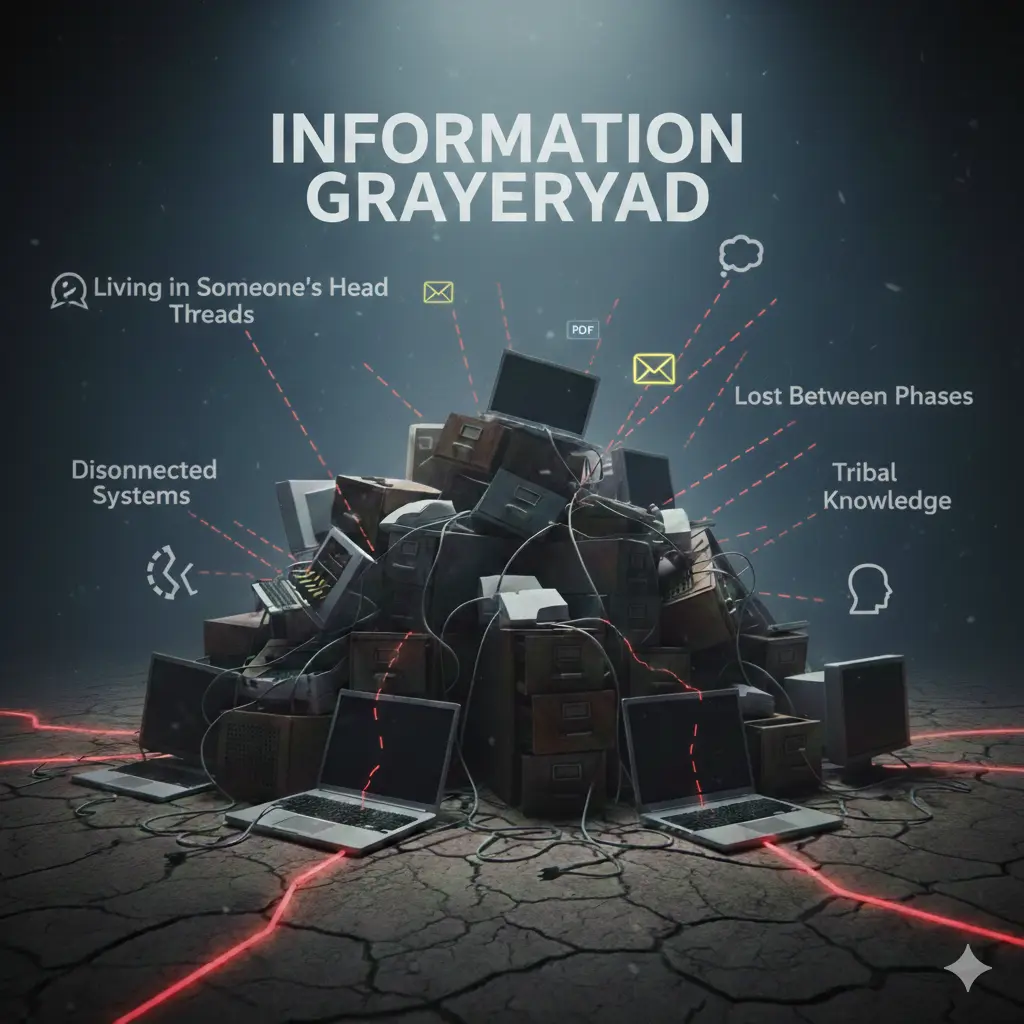
Construction is one of the most complex industries in the world. Multiple stakeholders. Massive budgets. Compressed schedules. High liability. Long lifecycle impact.
Yet the information that drives decisions is often:
- Buried in email threads
- Locked in PDFs
- Stored in disconnected systems
- Living in someone’s head
- Or lost between phases
When facts aren’t structured and accessible, teams default to instinct.
And instinct is expensive.
Delays.
Rework.
Change orders.
Claims.
Frustrated owners.
We label these as coordination problems or contractor problems.
But at the root?
They are data problems.
Hope Is Not a Strategy
No airport director, facility manager, or owner should have to “guess” at the status of their own asset.
No executive should make million-dollar decisions based on scattered documentation.
No project team should rely on tribal knowledge to operate a facility that will last 30–50 years.
The built environment deserves better than:
“Reply hazy. Try again later.”
What Construction Actually Needs

We don’t need more software for the sake of software.
We need:
- Structured information
- Clear ownership of data
- Lifecycle continuity
- Visibility across silos
- Answers that are searchable, verifiable, and reliable
When information is organized and prepared correctly, you don’t shake a ball for answers.
You ask a system.
And it responds with facts.
From Guessing to Knowing
The difference between chaotic projects and controlled ones is not luck.
It’s clarity.
It’s having the right information, in the right format, accessible at the right time — from planning to construction to operations.
Because when the data is structured properly:
You stop guessing.
You stop praying it works out.
You start leading with confidence.
And the Magic 8 Ball?
It can go back to being a toy.

No responses yet